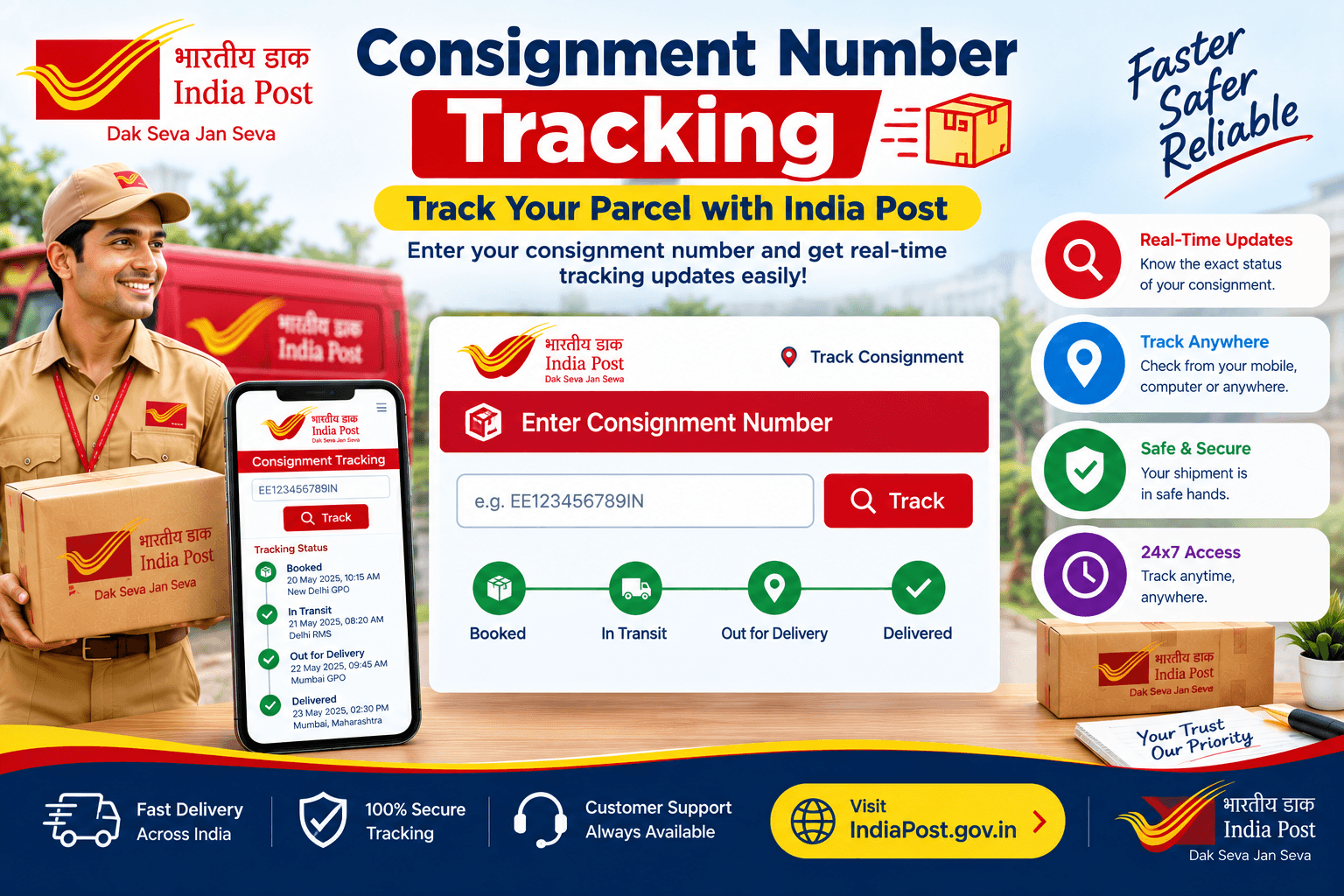
Consignment number tracking is the process of using a shipment’s unique code to check exactly where it is in the India Post network, from the moment it is booked to the moment it reaches the recipient.
This guide covers what a consignment number actually is, where to find it, how to decode what each part means, and what to do if you have lost it entirely.
Every parcel handled by India Post relies on this single code to stay traceable across a network that spans thousands of post offices. Understanding the code itself, not just how to enter it into a search box, gives you a clearer picture of your shipment before you even check its live status.
For a postal network serving well over a billion people, the consignment number is what keeps an individual parcel from disappearing into a much larger system. Every scan, transfer, and status update tied to your shipment references this one code, which is why keeping it safe from the moment of booking matters far more than it might initially seem.
Table of Contents
- What Is a Consignment Number?
- Where to Find Your Consignment Number
- How to Track Using Your Consignment Number
- Decoding the Prefix Letters
- What to Do If You Lost Your Consignment Number
- How Long Tracking Data Stays Available
- Frequently Asked Questions
What Is a Consignment Number?
A consignment number is a unique 13 character alphanumeric code assigned to a shipment the moment it is accepted at a post office.
It consists of two letters, followed by nine digits, followed by two more letters, and it serves as the single reference point for every scan event recorded against that shipment.
Beyond tracking, this number also acts as proof of booking and is the reference required for filing any complaint or compensation claim.
Where to Find Your Consignment Number
The most reliable place to find your consignment number is your booking receipt, where it is typically printed on the second line and labeled Consignment No. or Article ID. If you booked online or through a marketplace, the same code usually appears in your confirmation email or order details page.
It’s worth saving a photo of the receipt as soon as you book, since the physical slip is easy to misplace and the number is difficult to recover without it.
How to Track Using Your Consignment Number
Once you have the code, tracking takes only a few steps:
- Copy the 13 character code exactly, without extra spaces.
- Enter it into a tracking tool such as indiaposttrackings.com.
- Review the current status, last known location, and full scan history.
- If needed, cross check the result on the official India Post Track and Trace page.
A newly booked shipment can take up to 24 hours to appear in the system, so an empty result immediately after booking usually just means the first scan hasn’t been logged yet.
Decoding the Prefix Letters
The first letter of a consignment number identifies the type of service or booking, which means you can often tell what kind of shipment you’re dealing with before checking its live status.
| Prefix | Meaning |
|---|---|
| E | Standard Speed Post, booked individually at a post office counter. |
| A | Speed Post booked in bulk by banks, government offices, or institutions. |
| R | Registered letters, typically legal notices or important documents. |
| C | Registered parcels, usually heavier items sent by registered mail. |
| L | Domestic parcel service, sometimes used for e-commerce shipments. |
The second letter typically identifies the state or region the item was booked in, while the final two letters indicate the destination country, almost always IN for domestic delivery within India.
Why This Number Matters Beyond Tracking
It’s easy to think of the consignment number as just a tracking code, but it serves a few other important purposes worth knowing. It’s your primary proof that an item was booked and accepted by India Post, which matters if a dispute ever arises about whether something was sent at all.
It’s also the reference required for filing any formal complaint or compensation claim, since post office staff and the CRM complaint system both use it to pull up your shipment’s full record.
For businesses sending items regularly, keeping an organized log of consignment numbers alongside order details can make resolving customer queries considerably faster than searching through old receipts one at a time.
What to Do If You Lost Your Consignment Number
Losing your consignment number is a common but solvable problem. Start by checking your email and SMS inbox for a booking confirmation, since most bookings generate one automatically.
If nothing turns up there, check with the marketplace or platform you ordered through, if applicable, since order pages often display the tracking code separately.
As a last resort, visit the post office where the item was booked with any identifying details you have, such as the booking date, sender’s name, and recipient address, which staff can use to search their internal records.
Without the consignment number, online tracking isn’t possible, which is why it’s worth saving a photo of every receipt going forward.
A simple habit that prevents most of these situations is treating your receipt the same way you’d treat any other important document, at least until the shipment has been confirmed delivered.
A quick photo taken right at the counter, stored in a dedicated folder on your phone, takes only a few seconds and removes the risk of a misplaced paper slip becoming a real problem later.
How Long Tracking Data Stays Available
Consignment tracking data is generally available for up to 60 days from the date of booking. After that window, detailed scan history may no longer be accessible through standard tracking tools.
If you need tracking records for a compensation claim or dispute that’s likely to take longer than that to resolve, it’s worth saving a screenshot of the full tracking timeline early on, rather than assuming you can look it up again later.
Final Thoughts
Consignment number tracking is straightforward once you understand what the code represents and where to find it if it goes missing. For a quick, reliable check anytime, indiaposttrackings.com lets you track your consignment number in seconds, with no login or app required.
FAQs
What is a consignment number?
A consignment number is a unique 13 character code assigned to a shipment at booking, used to track its status from acceptance through delivery.
Where do I find my consignment number?
It is printed on the second line of your booking receipt, usually labeled Consignment No. or Article ID, and is also included in booking confirmation emails or SMS messages.
How do I track using a consignment number?
Enter the number into a tracking tool such as indiaposttrackings.com to view the current status and full scan history of your shipment.
What if I lost my consignment number?
Check booking confirmation emails or SMS messages first. If those are unavailable, visit the post office where the item was booked with any identifying details, such as the booking date and sender name.
How long does consignment tracking data stay available?
Consignment status is typically available for up to 60 days from the date of booking, after which detailed tracking history may no longer be accessible.
Can two shipments have the same consignment number?
No, the middle digits of every consignment number are generated to be unique, so no two shipments share the same code.