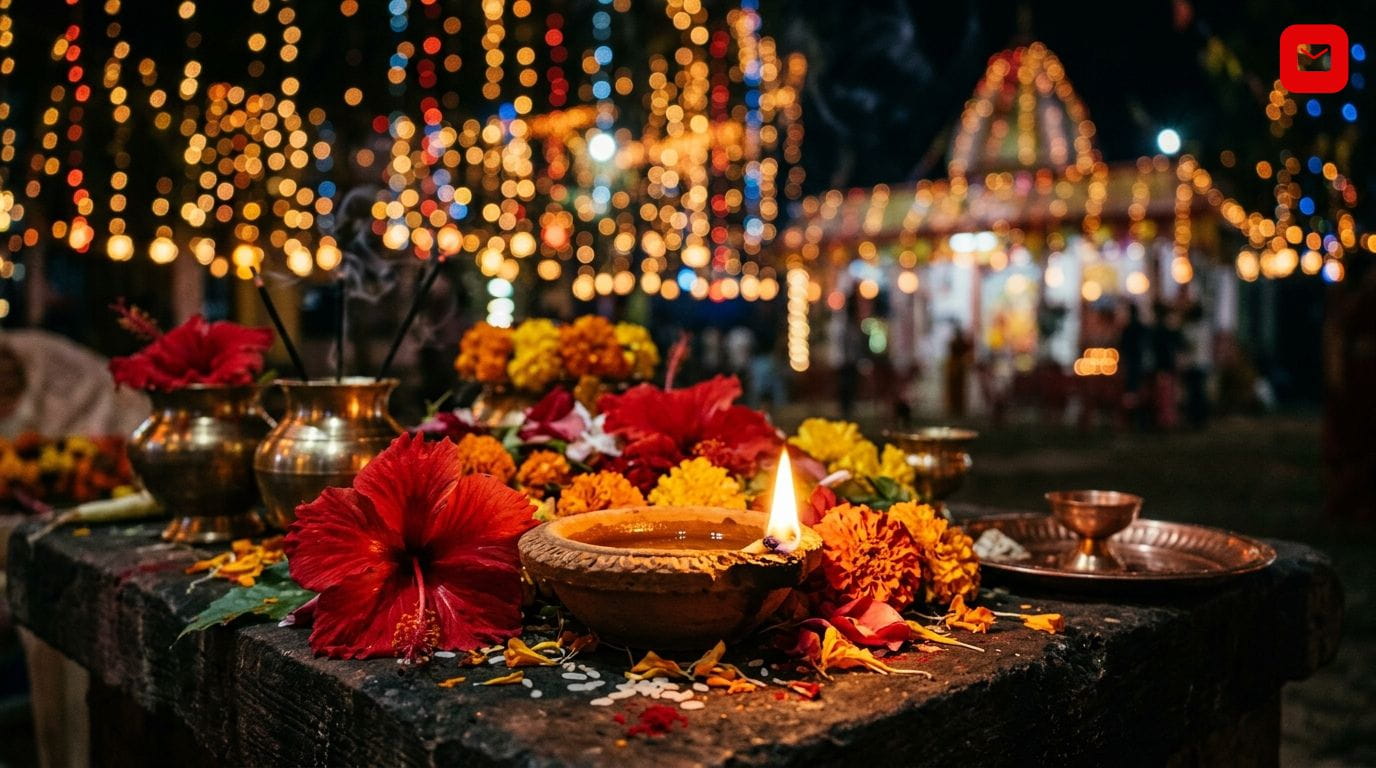
The Kali Puja countdown for 2026 begins now, as the festival falls on Sunday, November 8, 2026, making it one of the most anticipated Hindu celebrations of the year. Also known as Shyama Puja or Mahanisha Puja, Kali Puja is dedicated to the fierce and powerful Goddess Kali and is celebrated with extraordinary devotion across West Bengal, Odisha, Assam, and Bihar. The festival coincides with Diwali night but carries its own unique spiritual energy rooted in Tantric tradition, midnight rituals, and the worship of the divine feminine. This complete guide covers the exact date, puja muhurat, traditions, history, and everything you need to know before the countdown ends.
Kali Puja 2026 Date and Countdown
| Detail | Information |
|---|---|
| Festival Name | Kali Puja (Shyama Puja, Mahanisha Puja) |
| 2026 Date | Sunday, November 8, 2026 |
| Tithi | Kartik Amavasya (New Moon) |
| Amavasya Begins | 11:27 AM on November 8, 2026 |
| Amavasya Ends | 12:31 PM on November 9, 2026 |
| Nishita Kaal Muhurat | 11:39 PM (Nov 8) to 12:31 AM (Nov 9) |
| Duration of Muhurat | 53 minutes |
| Coincides With | Diwali 2026 |
| Primary Celebration | West Bengal, Odisha, Assam, Bihar |
| Next Kali Puja | October 29, 2027 |
Kali Puja 2026 falls on the 312th day of the year and aligns with the Amavasya Tithi in the Hindu lunar calendar. The most spiritually potent moment of the puja is the Nishita Kaal window from 11:39 PM to 12:31 AM when Goddess Kali’s energy is believed to be at its peak.
What Is Kali Puja?
Kali Puja is one of the most sacred Hindu festivals dedicated to Goddess Kali, the fierce incarnation of Goddess Durga who symbolizes strength, protection, and the destruction of evil. She is also known as Kal Bhoi Nashini, which means the destroyer of evil and fear.
The puja is performed during Nishita time, which is deep midnight, on the Amavasya of the Hindu month of Kartik. This timing is intentional as darkness is considered the domain of Goddess Kali, and midnight worship is believed to bring the most powerful blessings.
Kali Puja shines brightest in Kolkata, a city whose very name historians trace to Kalikshetra meaning the land of Kali. The festival creates an atmosphere of deep reverence where chants, drums, incense, and the glow of earthen lamps fill every street and neighborhood.
History and Origin of Kali Puja
Kali worship in Bengal has ancient Tantric roots, but organized public Kali Puja gained massive popularity in the 18th century under the patronage of King Krishnachandra of Nadia, also known as Navadvipa.
King Krishnachandra spearheaded the movement to bring Kali Puja into public celebration alongside wealthy landowners in Bengal. What began as royal patronage slowly transformed into a beloved community tradition embraced by people across all walks of life.
Over the 19th and 20th centuries, the festival grew alongside Durga Puja as one of the defining cultural and spiritual events of Bengali identity. Today it is celebrated with grand pandals, artistic idol installations, and community gatherings that rival Durga Puja in scale and enthusiasm.
The spiritual roots of Kali Puja trace to the legend of demons Shumbha and Nishumbha who wreaked havoc across the world. Goddess Kali emerged from the brow of Goddess Durga to annihilate these forces of evil, establishing her eternal role as the protector of the universe.
Kali Puja 2026 Muhurat and Puja Timings
Performing Kali Puja at the correct muhurat is considered essential to receive the goddess’s full blessings. Here are the verified timings for 2026:
| Timing | Detail |
|---|---|
| Amavasya Tithi Start | 11:27 AM, November 8, 2026 |
| Amavasya Tithi End | 12:31 PM, November 9, 2026 |
| Nishita Kaal Puja Window | 11:39 PM to 12:31 AM |
| Ideal Puja Duration | 53 minutes |
| Bhoot Chaturdashi | November 7, 2026 (night before) |
The Nishita Kaal window from 11:39 PM to 12:31 AM is the most auspicious time for Kali Puja rituals. Pundits and Vedic scholars emphasize performing the puja during this window for maximum spiritual efficacy in dispelling negativity and invoking the goddess’s protection.
Bhoot Chaturdashi: The Night Before Kali Puja
The day before Kali Puja, which falls on November 7, 2026, Bengalis observe Bhoot Chaturdashi. On this night, devotees light fourteen earthen lamps at home to ward off evil spirits and negative influences.
The number fourteen holds deep symbolic meaning, representing the fourteen worlds in Hindu cosmology. Each lamp illuminates a corner of darkness, both physical and spiritual, preparing the home and heart for the arrival of Goddess Kali the following night.
This tradition makes the entire two-day period one of continuous spiritual preparation and heightened devotion.
Kali Puja Rituals Step by Step
Kali Puja follows a series of sacred rituals that blend devotion, artistry, and ancient Tantric tradition:
Idol Installation Artisans in Kumartuli, North Kolkata’s renowned hub of artisans, sculpt magnificent clay idols of Goddess Kali weeks before the festival. The idols are black or deep blue in colour, adorned with a garland of skulls, a protruding tongue, and weapons in her hands, standing on the chest of Lord Shiva.
Home and Pandal Decoration Devotees clean homes thoroughly and decorate entrances with alpana, which are ritual motifs drawn in rice paste. Community pandals are set up with creative themes ranging from mythological scenes to social messages.
Offerings to the Goddess Traditional offerings include:
- Red hibiscus flowers representing Kali’s fierce energy
- Sindoor (vermilion)
- Earthen lamps and incense
- Sweets, rice, lentils, and fruits
- Fish and meat in traditional Bengali households
- Sugarcane and ash gourd as symbolic substitutes in modern adaptations
Midnight Puja Rituals The main worship begins at the Nishita Kaal window. Devotees perform deep tantric rituals, chanting mantras from the Devi Mahatmya and other sacred texts. The atmosphere is filled with the sound of dhak (large drums), bells, and devotional songs.
Homa (Fire Ritual) Sacred offerings are made into the homa fire for purification and to invoke divine blessings for the household and community.
Prasad Distribution After the puja, blessed food is distributed to all devotees. In traditional settings this includes non-vegetarian prasad. Modern community pandals often offer sweets and vegetarian items.
Visarjan The following day or as per the schedule, idols are immersed in rivers or water bodies. Emotional processions with music, fireworks, and chants of Jai Maa Kali mark the goddess’s farewell until next year.
Famous Kali Puja Celebrations Across India
Kolkata, West Bengal
Kolkata is the heart of Kali Puja celebrations in India. The city transforms into a spiritual and artistic spectacle with thousands of pandals, each attempting to outdo the others in creativity and grandeur.
Key temples to visit:
- Kalighat Kali Temple — One of the 51 Shakti Peethas and the holiest Kali temple in India. Thousands gather for darshan throughout the night.
- Dakshineswar Kali Temple — Deeply connected to the life of Sri Ramakrishna Paramhansa. Famous for its spiritual energy and midnight rituals.
- Tollygunge, Howrah, and Barasat — Each locality organizes its own large-scale celebrations with elaborate pandals and processions.
Barasat, North 24 Parganas
Barasat’s Kali Puja is often compared in grandeur to Kolkata’s Durga Puja. The Pioneer Athletic Club Barasat Kali Puja is one of the most celebrated in the state, featuring towering idols and theme-based pandal designs.
Odisha and Assam
Both states observe Kali Puja with deep reverence alongside Diwali. The rituals follow the Bengali tradition, with midnight worship, lamp-lighting, and community gatherings at temples and pandals.
Bihar
Major celebrations are held at temples such as the Maa Kali Temple in Jamui, where nightlong worship, special food offerings, and the lighting of lamps bring communities together in devotion.
Kali Puja vs Diwali: Key Differences
Many people wonder why Bengal celebrates differently from the rest of India on the same night. Here is a clear comparison:
| Aspect | Kali Puja (Bengal) | Diwali (Rest of India) |
|---|---|---|
| Deity Worshipped | Goddess Kali | Goddess Lakshmi |
| Focus | Power, protection, transformation | Wealth, prosperity |
| Peak Ritual Time | Midnight (Nishita Kaal) | Evening |
| Atmosphere | Deep spiritual, Tantric energy | Festive, celebratory |
| Idol Installation | Yes, large clay idols | No |
| Offerings | Red hibiscus, meat (traditional), lamps | Sweets, fruits, lamps |
| Processions | Yes, Visarjan procession | No |
| Fireworks | Yes, accompanies spiritual energy | Yes, celebratory |
While both festivals fall on the same Amavasya night, they represent beautifully distinct expressions of Hindu tradition. Kali Puja celebrates the fierce and protective aspect of the divine feminine while Diwali honors abundance and prosperity.
How to Perform Kali Puja at Home in 2026
You can observe Kali Puja at home with sincerity and devotion even without a large setup. Here is a simple guide:
Preparation on November 7 (Bhoot Chaturdashi) Light 14 earthen lamps around your home after sunset to ward off negative energy and prepare your space for the goddess.
On November 8 (Kali Puja Day)
- Clean your puja space and set up an image or idol of Goddess Kali
- Decorate with red hibiscus flowers, fresh marigolds, and green leaves
- Light incense and a ghee lamp
- Offer fruits, sweets, and rice
- Begin chanting the Kali mantra and Devi Mahatmya verses after 11:39 PM during the Nishita Kaal window
- Stay awake through the night in vigil if possible as this is considered the most devotionally powerful practice
Kali Mantra for Home Puja Om Krim Kalikayai Namah is the primary Kali mantra, chanted 108 times with a mala for blessings, protection, and the removal of obstacles.
Kali Puja 2026 Countdown: Days Remaining
Kali Puja 2026 falls on Sunday, November 8, 2026. As of today, June 4, 2026, there are exactly 157 days remaining until Kali Puja 2026.
Mark your calendar, plan your puja preparations, and join millions of devotees across India and the Bengali diaspora worldwide as we count down to one of the most powerful and spiritually transformative nights of the Hindu calendar.
Frequently Asked Questions About Kali Puja 2026
When is Kali Puja in 2026?
Kali Puja 2026 falls on Sunday, November 8, 2026. It coincides with the Amavasya Tithi in the Hindu month of Kartik and also falls on the same night as Diwali 2026.
What is the muhurat for Kali Puja 2026?
The most auspicious Nishita Kaal Muhurat for Kali Puja 2026 is from 11:39 PM on November 8 to 12:31 AM on November 9, 2026. This 53-minute window is considered the most powerful time to perform the puja.
What is Kali Puja also known as?
Kali Puja is also called Shyama Puja and Mahanisha Puja. It is dedicated to Goddess Kali, the fierce incarnation of Goddess Durga.
Where is Kali Puja celebrated most grandly?
Kali Puja is celebrated with great grandeur in Kolkata and West Bengal, particularly at the Kalighat Kali Temple and the Dakshineswar Kali Temple. Barasat in North 24 Parganas is also famous for its large-scale celebrations.
Is Kali Puja the same as Diwali?
Both festivals fall on the same Amavasya night but they are different in focus. Diwali worships Goddess Lakshmi for wealth while Kali Puja worships Goddess Kali for protection, power, and spiritual liberation.
What is Bhoot Chaturdashi?
Bhoot Chaturdashi is observed the night before Kali Puja, which falls on November 7, 2026. Devotees light 14 earthen lamps at home to ward off evil spirits and prepare for the arrival of Goddess Kali.
What offerings are made during Kali Puja?
Traditional offerings in traditional Bengali households include red hibiscus flowers, sindoor, earthen lamps, incense, rice, lentils, fruits, sweets, and fish or meat. Modern community pujas often use vegetarian substitutes.
When is Kali Puja in 2027?
Kali Puja 2027 will be celebrated on October 29, 2027.
Read Also: SpotOn Tracking: Check Spoton Logistics Courier Status Online
Kali Puja Countdown: current 2026 guidance
For the most reliable result, compare the latest scan with the official India Post Track and Trace service. Tracking is event-based: updates appear after acceptance, sorting, dispatch and delivery scans rather than showing continuous GPS movement.
- Verify letters and digits on the booking receipt.
- Allow a reasonable interval between processing scans.
- Keep the receipt until the article is delivered.
Last verified: 9 September 2026. Confirm live tracking, prices and service availability on the official India Post website.