Waiting for a parcel or registered letter from Germany? Deutsche Post tracking is the easiest way to follow it from a German post office counter to your doorstep in India. Deutsche Post is Germany’s national postal operator — part of the DHL Group — carrying millions of letters and parcels to Indian addresses each year: registered letters from family, Einschreiben documents, e-commerce orders and business shipments. This guide explains how Deutsche Post tracking works, how to read your Sendungsnummer (shipment number), where to enter it online, and what happens once your item reaches India and India Post takes over.
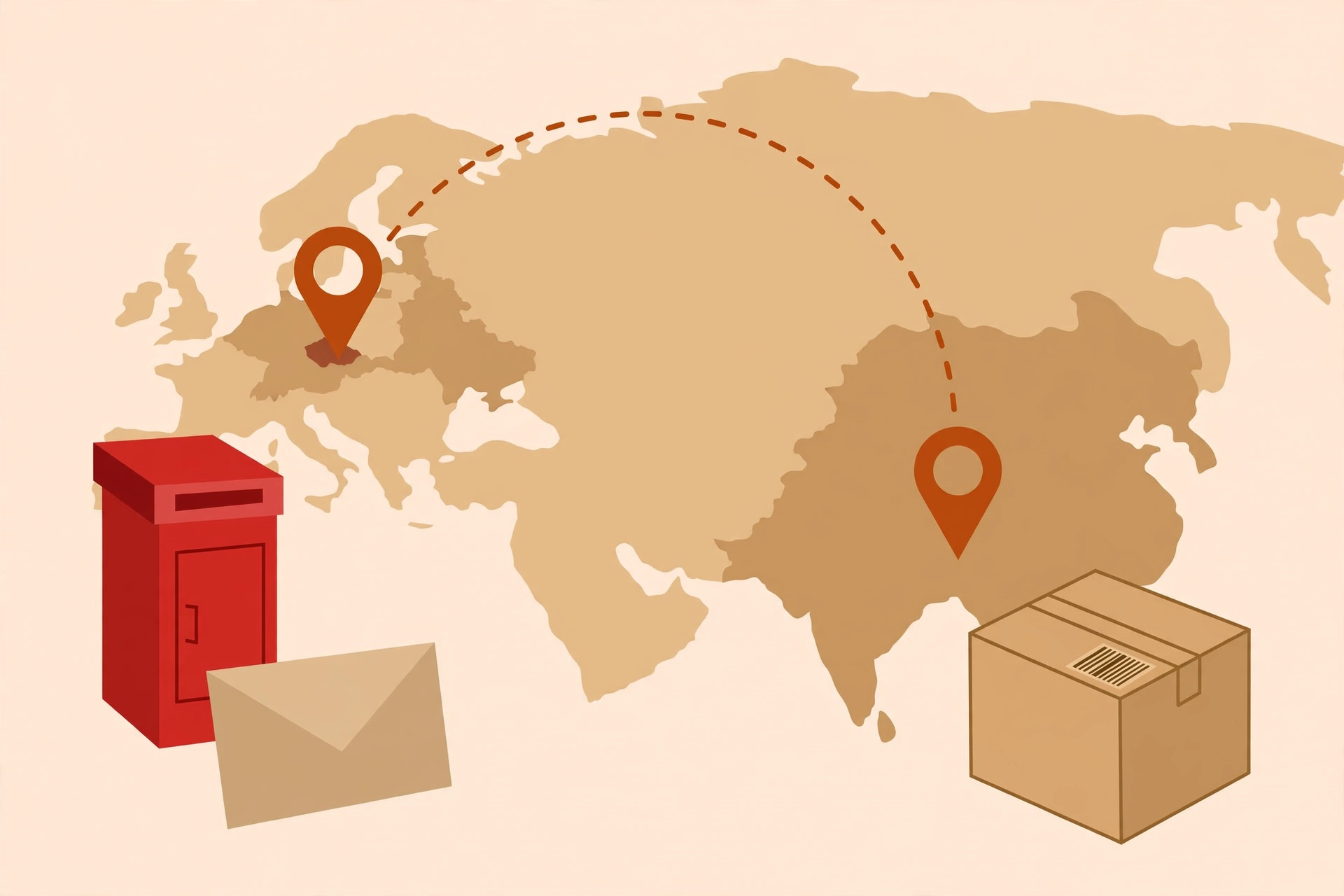
How Deutsche Post Tracking Works for Indian Recipients
When a sender posts an item with a tracked Deutsche Post service — a registered letter (Einschreiben), a tracked packet or an international parcel — it is scanned at each major point: the posting office, the outward sorting centre, the international exchange office and export from Germany. Each scan becomes a status event on the tracking page, so you can see where your item is.
Deutsche Post only carries your item as far as the Indian border. Once it arrives in India, it clears Indian Customs and is then handed to India Post for last-mile delivery. The same UPU S10 tracking number keeps working across this handover: follow the German leg on the Deutsche Post website, then use the same number on the India Post tracking page for customs and delivery scans.
Deutsche Post Tracking Number Formats
International tracked items use the global UPU S10 format: two letters, nine digits and Germany’s DE country code — so a typical Deutsche Post tracking number looks like RR123456789DE (format example, not a real number). The leading letters hint at the service: “RR” or “RB” are usually registered letters (Einschreiben), while “LX” or “UX” appear on tracked packets and small parcels.
DHL Paket numbers look completely different: long strings of digits — typically 12 or 20 — with no letters at all. If your number is all digits, it is almost certainly a DHL Paket, so track it through DHL instead. Whatever the format, enter the number without spaces or hyphens: every digit must be exact.
How to Track a Deutsche Post Parcel Step by Step
- Open the tracking page. Go to the official Deutsche Post website and choose Sendungsverfolgung (shipment tracking), or use the Post & DHL app on your phone — both handle Deutsche Post and DHL numbers.
- Enter your Sendungsnummer exactly as it appears on the receipt or in the sender’s message, without spaces or hyphens.
- Read the status events. Typical scans include acceptance at the posting office, processing at the outward sorting centre, arrival at the international exchange office, and departure from Germany.
- Follow the Indian leg separately. Once tracking shows the item has arrived in India, paste the same number into the India Post tracking tool to watch customs clearance and last-mile delivery scans.
If Deutsche Post tracking shows no result in the first 24–48 hours, do not worry: the first scan sometimes appears only at the sorting centre. Allow two days, then check with the sender that you have the full number.
Deutsche Post vs DHL: What Is the Difference?
Deutsche Post and DHL belong to the same company — the DHL Group — but handle different things. Deutsche Post Brief handles letters, postcards, registered mail and small tracked packets; DHL Paket handles larger parcels and e-commerce shipments. Because of this split, they use different tracking number formats and slightly different tracking pages.
Many people searching for “deutsche post tracking” actually hold a DHL Paket number. Rule of thumb: a number ending in “DE” is Deutsche Post Brief; a long string of digits is DHL Paket. For the latter, read our dedicated DHL tracking guide, which covers DHL’s scans and the DHL-to-India Post handover.
From Deutsche Post to India Post: The Delivery Handover
When your item reaches India, it first goes to a Foreign Post Office — usually in Delhi, Mumbai, Chennai or Kolkata — where Indian Customs examines it. After clearance, the item passes from the international postal stream into the hands of India Post, and from that point your delivery is handled exactly like a domestic Registered Parcel or Speed Post article. The person who brings it to your door is an India Post postman.
This handover is why tracking can briefly look contradictory: the Deutsche Post page may show the item handed to the destination postal operator while the India Post page still shows it in transit. Both are correct — the first means Deutsche Post’s leg is finished; the second shows India Post’s progress. See also our guide to EMS international tracking.
Customs Clearance for German Parcels in India
Every parcel from Germany passes through Indian Customs — the stage that causes most delays. Officers may open and inspect the parcel, and duty or GST can apply depending on contents and declared value. An accurate customs declaration from the sender helps avoid holds.
Typical events here include “Held in Customs” and “Released from Customs”. If your item sits at a customs status for more than a week, contact the Foreign Post Office named in the tracking details — you may need an invoice, ID proof or a clearance authorisation letter. Warning: never pay anyone who calls claiming to be customs and demanding money over the phone; genuine duty is paid through official channels only.
Deutsche Post Delivery Timeframes: Germany to India
So how long does delivery from Germany take? As a rough, indicative guide, Deutsche Post’s tracked international services typically take around five to fifteen business days from Germany to destinations worldwide. For India specifically, one to three weeks door to door is common once you include flight availability, customs inspection and the onward India Post journey.
Untracked or economy services take noticeably longer — four to six weeks is not unusual around Christmas. For urgent items, ask the sender to use a tracked service and share the tracking number immediately so you can spot any customs hold early. These timeframes are indicative only; weather, flights and customs workload all affect real delivery times.
Frequently Asked Questions
Is Deutsche Post tracking the same as DHL tracking?
Not exactly. Deutsche Post (letters and registered mail) and DHL Paket (parcels) both belong to the DHL Group, but they use different tracking number formats — S10 numbers ending in DE versus long numeric strings — and different tracking systems. Check your number format first to make sure you are on the right tracking page.
Tracking shows my item was delivered by Deutsche Post, but I received nothing. What does that mean?
A “delivered” or “handed over” scan on the Deutsche Post page usually means the item reached India’s postal system, not your address. Switch to India Post tracking with the same number for the customs and last-mile scans. If that page also shows delivery and you have nothing, check with neighbours and your local post office before raising a complaint.
Can I track my Deutsche Post parcel on the India Post website?
Yes. Once the item has entered India, the same S10 tracking number normally works on the India Post tracking page, showing customs clearance and delivery scans. It may take a day or two after the “arrived in India” scan for India Post’s page to start showing updates.
Why does my tracking number show no results on deutschepost.de?
Usually you checked too soon (allow 24–48 hours for the first scan), mistyped the number, or are on the wrong carrier’s page — a long numeric number belongs to DHL, not Deutsche Post. If none of these apply, ask the sender to confirm the number and service used.
Will I have to pay customs duty on a parcel from Germany?
It depends on the contents and their declared value. Customs may charge duty or GST on dutiable goods, while low-value gifts often pass without charges. Genuine duty is always paid through official channels with a receipt — never to someone who calls demanding an instant payment.