When the Government of India launched India Post Payments Bank in September 2018, it turned the country’s vast postal network into a banking network almost overnight. Linked with roughly 1.55 lakh post offices — more access points than any conventional bank in India — India Post Payments Bank (IPPB) was created to bring simple, affordable digital banking to every corner of the country, including villages where no bank branch has ever existed. If you already use post office savings schemes or send Speed Post, IPPB will feel like familiar territory: the same friendly postman can now open your bank account at your doorstep. In this guide you will learn what India Post Payments Bank offers, how to open an account, which services and charges apply, how it differs from the traditional post office savings account, and what it cannot do.
What Is India Post Payments Bank?
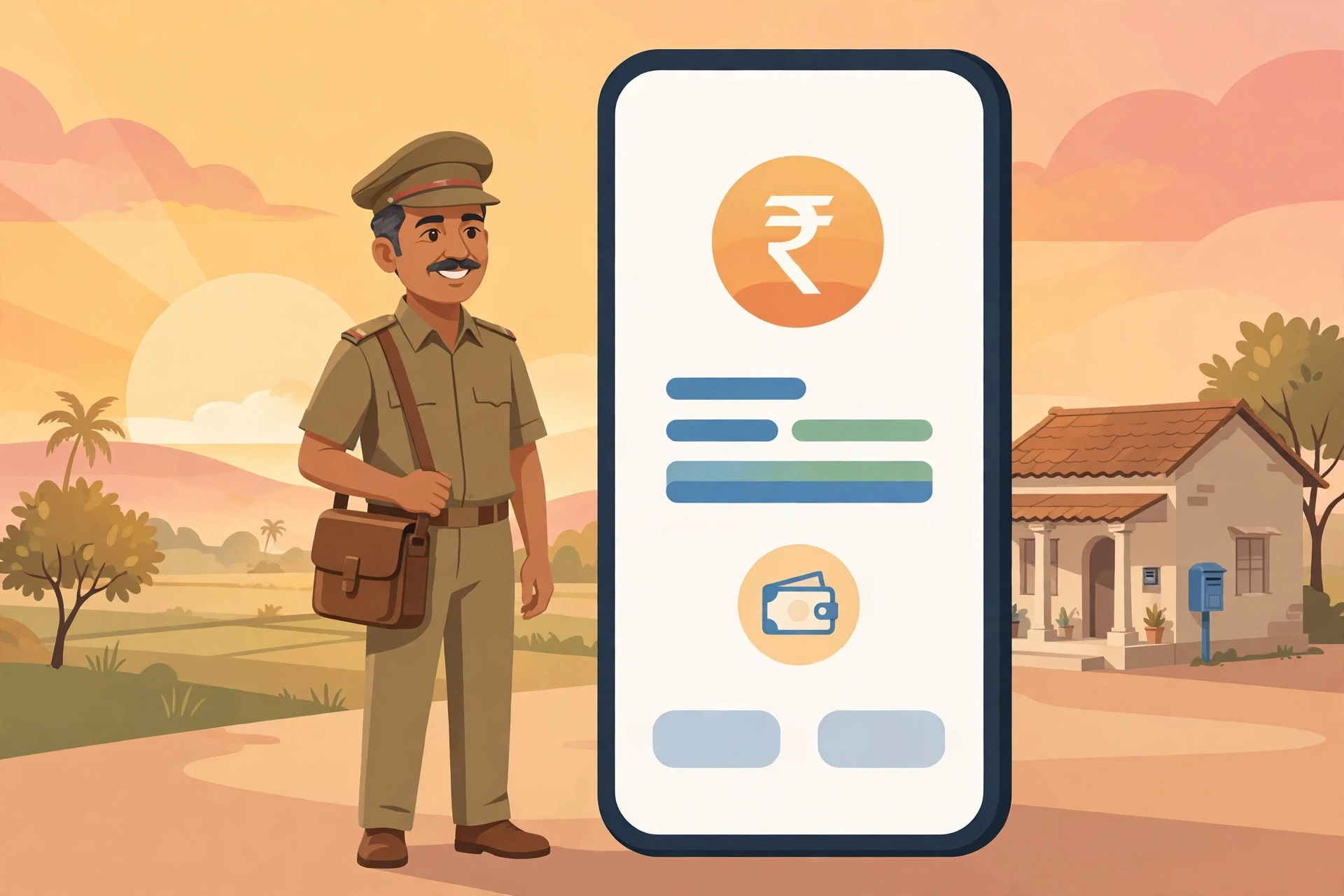
India Post Payments Bank is a payments bank licensed by the Reserve Bank of India and wholly owned by the Department of Posts, Government of India. Payments banks are a special category created for financial inclusion: they can accept deposits, offer remittance services and issue debit cards, but they cannot lend money or issue credit cards. IPPB was built for this model — its mission is to take banking to the “last mile”, especially rural and unbanked households that the postal department has served for over 150 years.
Instead of building costly branches, IPPB rides on the existing post office network. Nearly every post office doubles as an IPPB access point, and postmen and gramin dak sevaks work as banking correspondents. Through the IPPB mobile app and the India Post mobile banking app, customers can also bank entirely from their phones.
India Post Payments Bank Accounts and Key Features
IPPB keeps its account range simple. The two main account types are savings and current accounts, both designed for individuals and small businesses who need everyday banking without complexity.
Savings Account
The IPPB savings account is the product most people open. It comes with a digital debit card, a QR card for assisted transactions, and the full digital payments stack — NEFT, RTGS, IMPS and UPI. One limit to note: as per the bank’s stated limits, the maximum end-of-day balance on a savings account is Rs 1 lakh. This standard payments-bank rule fits the account’s purpose: everyday transactions rather than long-term savings.
Current Account
The current account is aimed at small merchants and businesses with frequent transactions. It supports high-volume digital payments and merchant payment solutions — useful for shopkeepers who want to accept digital payments without opening an account at a conventional commercial bank.
QR Card and AePS
Instead of a passbook, IPPB issues a QR card linked to your account. Combined with Aadhaar-enabled Payment System (AePS) fingerprint authentication, it lets customers withdraw cash and check balances at post offices using just a fingerprint — ideal for anyone uncomfortable with smartphones or PINs.
How to Open an India Post Payments Bank Account
Opening an IPPB account is straightforward — no big-city branch visit needed. The eligibility criteria are simple: you must be 18 years or older, and you need an Aadhaar card, a PAN card, and an Aadhaar-linked mobile number.
- Visit your nearest post office. Nearly every post office can open an IPPB account — see our guide to India Post services to find one near you.
- Or request doorstep banking. Call the toll-free helpline 155299 and ask for a doorstep account-opening visit — a banking correspondent will come to your home.
- Complete biometric eKYC. Your Aadhaar-linked fingerprint enables instant paperless verification, so no photocopies are needed.
- Activate and start banking. Once verification succeeds, your account is active and you can use the app, QR card and digital payments straight away.
Prefer the digital route? You can begin the process on the official IPPB website and then complete verification at a post office or through doorstep service.
India Post Payments Bank Services
Beyond basic accounts, IPPB offers a full set of everyday banking services built around digital payments and government transfers.
Money Transfers
IPPB supports NEFT, RTGS, IMPS and UPI — from the app, at a post office counter, or via doorstep banking. Note that IPPB is domestic only: it does not offer international inward or outward remittances.
Direct Benefit Transfers
LPG subsidy, pensions, MGNREGA wages and scholarships can land directly in your IPPB account through Direct Benefit Transfer, with no extra paperwork since the account is Aadhaar-linked.
Bill and Utility Payments
Electricity, water, gas, mobile recharges and DTH bills can be paid through the app or at a post office, and local merchants can accept digital payments through IPPB.
Doorstep Banking
IPPB’s signature service: a postman or banking correspondent visits your home for account opening, deposits, withdrawals and transfers. Book a visit through toll-free 155299 — doorstep banking charges apply per transaction, so check the current schedule of charges first.
India Post Payments Bank Charges and Fees
IPPB is positioned as an affordable banking option, and most digital transactions carry minimal or no cost. The main fee to know is the doorstep banking charge, applied per transaction when a correspondent visits your home. Cash handling and some assisted counter services may carry nominal charges too. Schedules are revised periodically, so confirm current charges on the official website or by calling 155299 first. For help with a charge on a postal (non-banking) service, see our India Post customer care number guide — IPPB itself runs a separate helpline.
IPPB vs Post Office Savings Account: The Key Difference
This is the most common point of confusion, so here is the clear answer. The post office savings account (POSA) is the Department of Posts’ own traditional savings scheme — the same family as recurring deposits, PPF and NSC. IPPB, by contrast, is a separately licensed payments bank owned by the same Department of Posts.
In practical terms: POSA is where you keep long-term savings and earn interest under government small-savings schemes, while IPPB is where you do everyday digital banking — UPI payments, transfers, DBT credits and doorstep transactions. Many customers hold both. Just remember they are different products with different rules, even when you manage them at the same post office counter.
Limitations of India Post Payments Bank
IPPB is deliberately a limited-purpose bank, and knowing its boundaries helps you decide if it fits your needs. As a payments bank it cannot offer loans or credit cards. It handles no international remittances — inward or outward — so customers needing foreign transfers will still need a conventional bank. And the Rs 1 lakh end-of-day savings cap (as per the bank’s stated limits) means it is not the place to park large sums. Within these limits, it does exactly what it was built for: simple, low-cost everyday banking for everyone.
Frequently Asked Questions
Is India Post Payments Bank a government bank?
Yes. IPPB is 100% owned by the Department of Posts, Government of India, and licensed by the Reserve Bank of India — your deposits sit with a regulated bank, not a private company.
What is the minimum balance for an IPPB account?
IPPB accounts are designed to be low-cost and accessible, with nominal balance requirements. Confirm the latest figures on ippbonline.com or by calling 155299 before opening your account.
Can I receive money from abroad in my IPPB account?
No. IPPB supports domestic transfers only — NEFT, RTGS, IMPS and UPI within India — and offers no international inward or outward remittances. You will need a conventional commercial bank account for foreign transfers.
How is IPPB different from India Post?
IPPB is a payments bank owned by the Department of Posts; “India Post” usually means the postal and small-savings side — mail, Speed Post, POSA and PPF. Same network, but separate services, accounts and helplines.
How do I contact India Post Payments Bank?
Call the toll-free helpline 155299 or email contact@ippbonline.in. For mail, Speed Post or savings schemes, use the separate India Post customer care channels.